This Week I Played
BEACON PINES
branching storytelling in a creepy small town
Quick stats
Playtime: 6.3 hours (4.3 hours past refund)
Price: $5.99 USD, £5.02 GBP (at time of review)
I paid: Nothing (from some bundle or something)
Small-town life
Beacon Pines is a phenomenal game (thanks Aaron for the recommendation!). Just to be upfront about it: I've already played the entire game and unlocked every achievement, so I'm not just reviewing the tip of the iceberg like I normally do - this is the real deal.
Beacon Pines is a game about a kid and his friends getting up to hijinx in a small town which turns out to not be quite what it seems. The problem with writing a review for this game, I'm immediately realising, is that because it's a mystery game, it's very hard to talk about without spoiling it. Also, some of the revelations are designed to be just a little world-shattering, so it'd be really shitty to even hint at them here. So I'm not going to. All I'll say is the fairly obvious things are not what they seem
.
The choice of kids as the main characters works really well here. In a similar vein to books like Northanger Abbey and The Book of Lost Things, Beacon Pines capitalises on the naïveté of its protagonists, who constantly expect supernatural or fantastical explanations - Rolo, for example, is convinced it's Aliens. I'm not saying whether it is or isn't aliens (no spoilers!), but at times there's a sense that the kids are in over their heads, in a world too adult for them to understand. But whereas The Book of Lost Things treats this somewhat pessimistically, with its protagonist being forced to come to terms with the grim realities of (part of) adult life, Beacon Pines is able to keep its childish and upbeat spirit, even when things get scary.
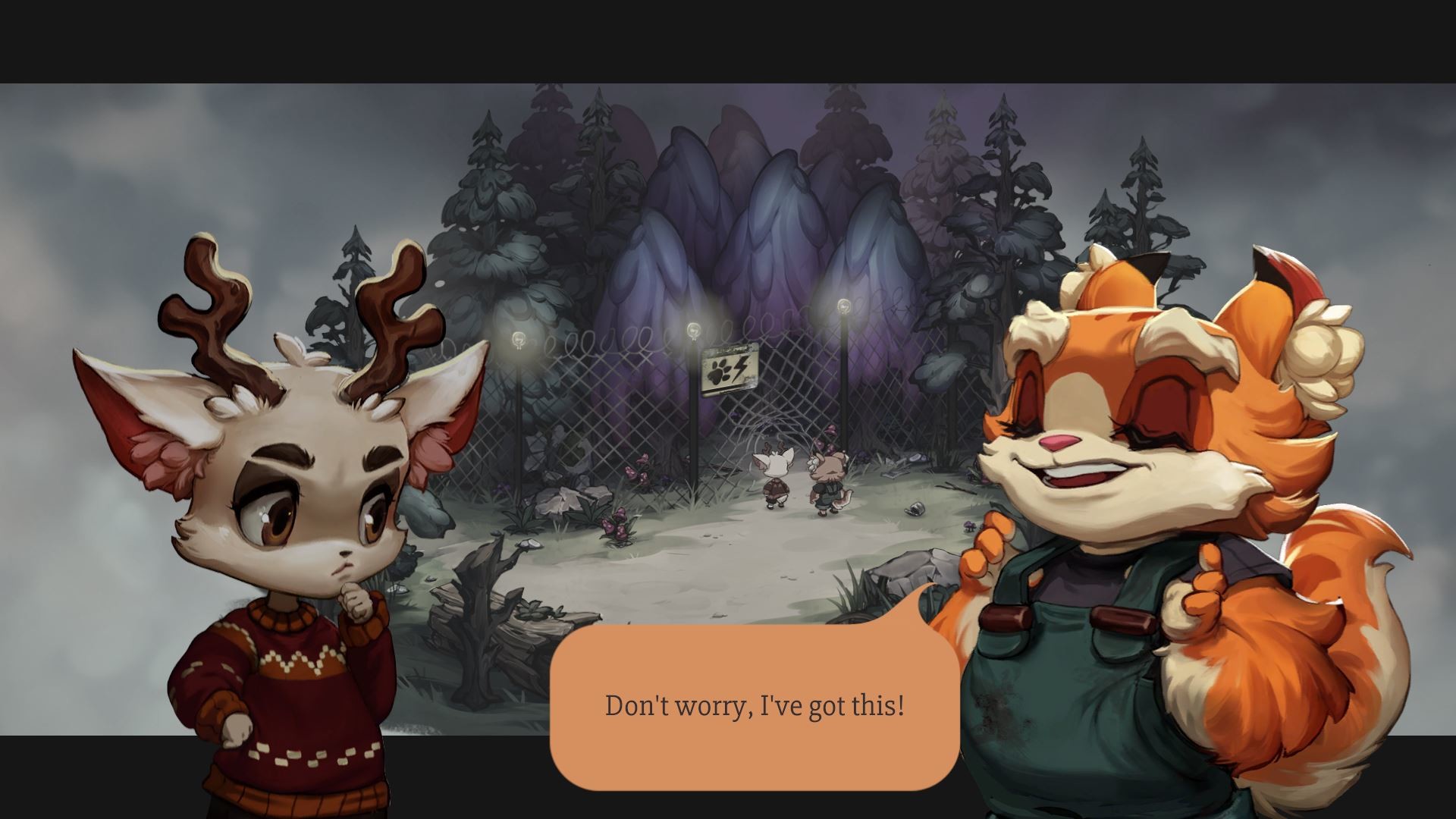
What could possibly go wrong?
The setting's great too. Set in a small town, you can expect to have a reasonable understanding of pretty well everyone in town by the end of it, which of course adds to some of the shock revelations and the pervasive sense of creepiness and unease. And the titular town is just begging for some kind of spooky mystery. It has all the standard amenities: a town square, a library, a little café, a run-down fertiliser factory with toxic waste outside and the lights still on in the middle of the night in the middle of a creepy forest. You know, the usual.
A story about change
The small-town setting also helps hammer home one of the fundamental themes of the game: change. Change, in a small town, is scary, and this game makes full use of this anxiety. Change shows up in other places too: fundamentally, if you strip away everything else, all the side characters, even all the mystery, this is a game about a young boy coming to terms with grief. He has lost his father, and he struggles to understand why. Why is his dad gone? How's he supposed to cope? Some of the most poignant scenes of the game stand against this difficult backdrop.
Related to this is the theme of personal change: the transition to adulthood, and the fear of who we might become if we make the wrong choices. This is quite prominent in my own life at the moment, and my relationship to change (and grief) is complicated. There are people (and thoughts in my head) arguing that I should change, and people (and thoughts) arguing that I shouldn't, and it's hard to know whether, how quickly, and in what direction I should. To anyone else who might be experiencing similar, I think Beacon Pines is a good help, for several reasons, only some of which are obvious. I'd recommend it :)
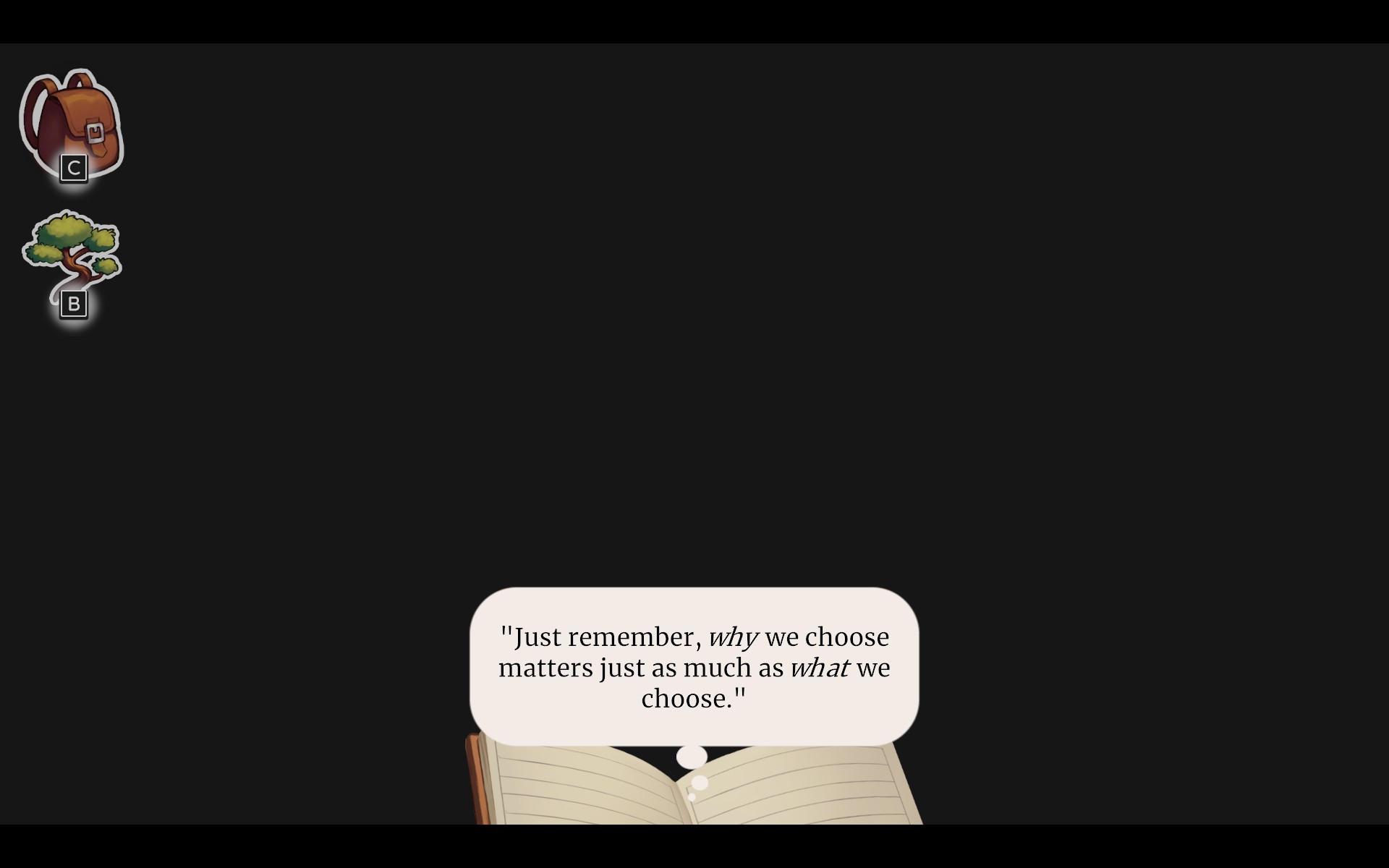
A sobering thought
Now, here's one of the most important parts of the game: it's set within a magic book, with an audible narrator. She tells the story, in a voice which I initially found a little overdramatic but have come to love, and interestingly she cares how the story goes. You see, the other thing that changes in Beacon Pines is the story itself. Throughout the game, by talking to people and interacting with objects in the world, you acquire charms
, little pictures associated with a specific word. When you get to branches in the story (laid out as a tree!), you are prompted to choose between your relevant charms; what you say determines what happens next, and the sum of your decisions has the power to change the ending of the story (fuck Aeonic, all my homies hate Aeonic). But this is not a work of pretentious bullshit, so there is a right answer, a happy ending, and a path which will finally satisfy the book's narrator.
Will I play more?
I mean I've already played it, innit. There's no more for me to play now, but even with its short playtime I'd highly recommend it! I completed it in basically one day, and it was hard to drag me away from my computer to do something other than play Beacon Pines.
I'll finish by noting some other things which I didn't really have space for above. Visually, it's a very beautiful game, especially in the dialogue scenes. The only bit that throughs me off is how much the characters stand out from the setting, especially Mr. Nuncreed's sprite, which looks like something out of Family Guy. The music though? INCREDIBLE. Much of the game uses just a simple piano score, which creates a sense of both simplicity and cohesion, and highlights the importance when other instruments are introduced: there's a jazzy detective scene, for the comedic value, and synths for... well, you'll see.